
Many birders, like my husband and I, like to keep what’s called a “life list”, that is, a list of all the bird species we’ve ever seen. Nowadays, with the eBird app (free, from Cornell University Lab of Ornithology), it’s pretty easy to keep track of that list and to know at any given moment the number of species you’ve seen in the world, or in a certain country, geographic location or in a particular time period. You can even keep track of how many species you’ve seen in your own backyard! Knowing what you’ve seen (and what you haven’t) can lead you to try to grow your list by seeking out birds that you haven’t seen before. It’s a pretty fun game—my kids compare it to Pokémon GO.
When there’s a bird that you know should be in a certain area and you go to look for it and don’t find it, and when that fruitless search happens multiple times over months or even years, we call that bird a “nemesis bird.”
Thanks to a trip with some birding guides, the Bluethroat is no longer one of our Spanish nemesis birds.
What’s a Bluethroat, you ask? Ah, it’s such a cutie! It’s about the size of a sparrow and has a big eye with a noticeable whitish eyebrow. Both the male and female can sport multiple “necklaces”—bands of color across their chests in cobalt blue or dark rufous, and the males also have blue under their beaks—hence their name. Here are some nice e-Bird pictures of Bluethroats.
These birds are classified in a loose group referred to as “flycatchers”, meaning their main food source is insects, often winged ones like beetles. According to BirdsoftheWorld.org, Bluethroats also eat a lot of ants, and in the fall, they change their diet to consist more of fruit (berries) and seeds.
Bluethroats are found across Europe and Asia, and occasionally in the far northwestern part of the US (in Alaska.) In Spain, according to SEO (the Spanish Ornithological Society, an affiliate of BirdLife International) they are mostly found in the central mountain ranges, the Cantabrian mountains and the mountains of León during the summer. They migrate south for the winter, but some individuals from more northern European locations come to Spain for the winter.
Still, the birds are not easy to find unless you know exactly where to look, and you are quite lucky. If it happens to be the right time of year so that they are singing on their territories, even better.
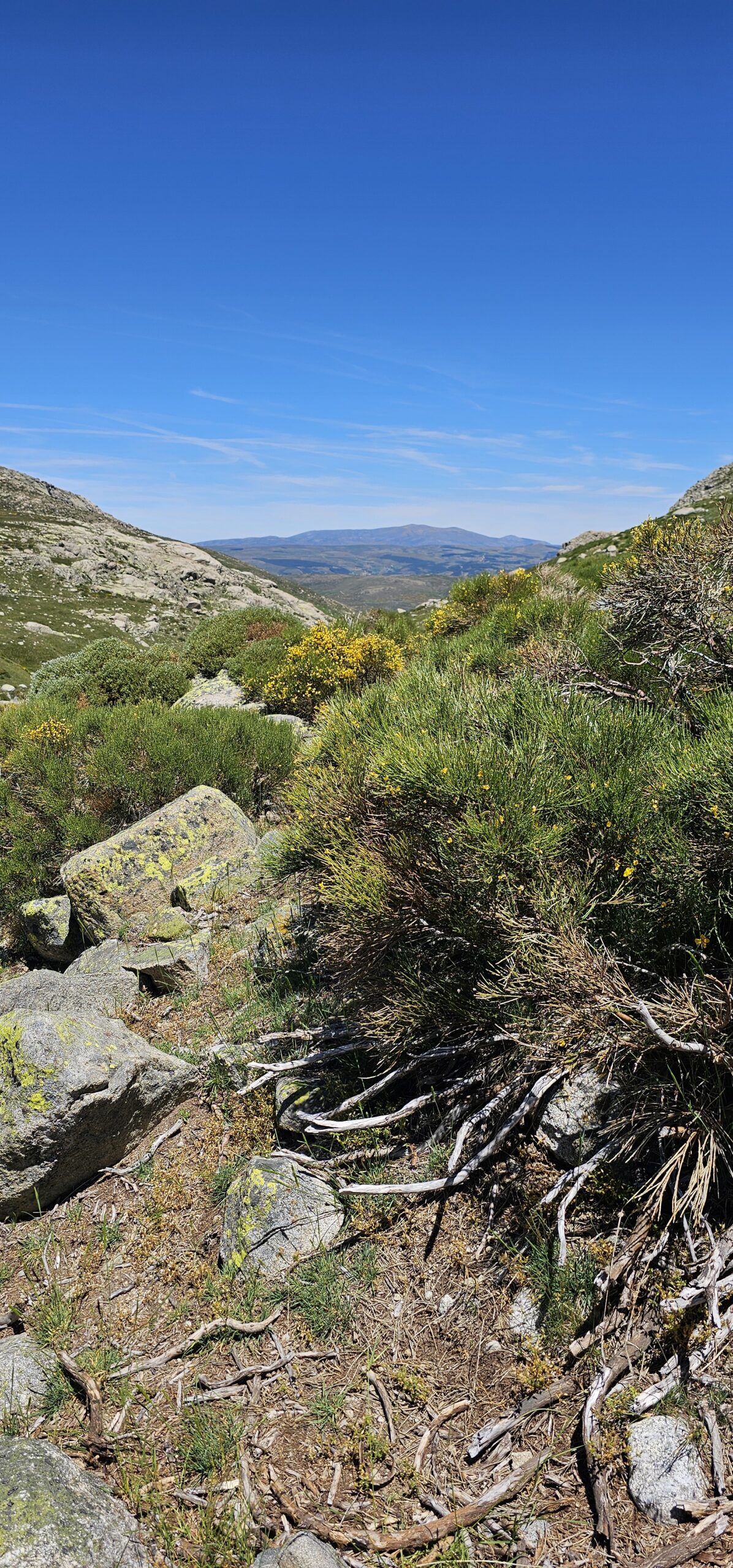
On our birding trip with SEO we went to the Sierra de Gredos Regional Park. The park is set in the Sierra de Gredos mountain range that is directly west of Madrid, about half-way to the Portuguese border, which is to say, about a two-hour car ride from Madrid. It’s a beautifully rugged area with lagoons that were carved by glaciers.
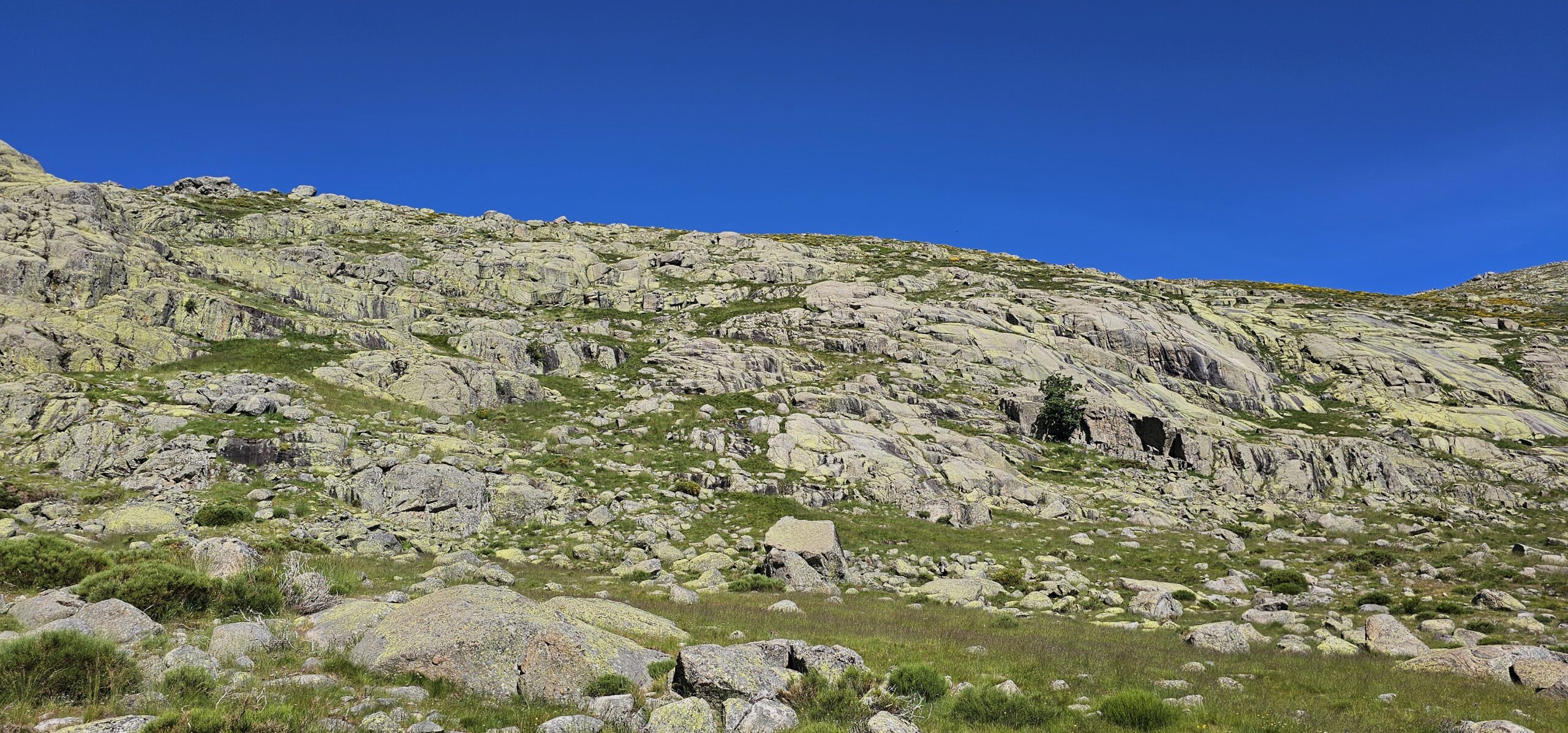
The landscape of the park is tundra-like due to the altitude, with lots of rocks and not much vegetation, but the plants that do manage to grow there are full of life in the summer.
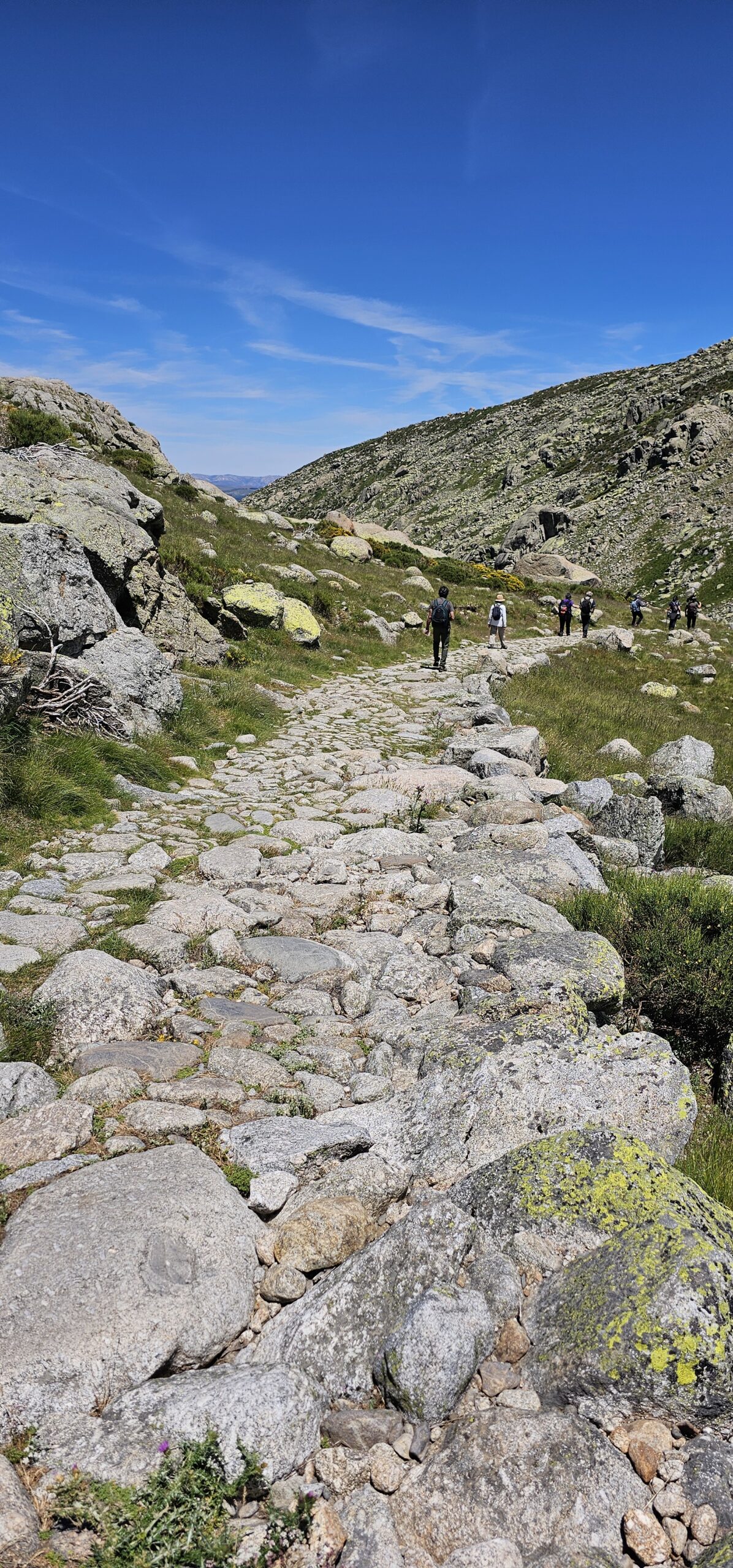
Running through the park is a fairly wide, rocky road that was laid by the Romans 2,200 years ago. Its primary purpose was to connect the cities of Ávila and Mérida so that armies could go back and forth, and also to transport metals that were mined in the Sierra de Gredos mountain range. Then, for hundreds of years the road was used for moving cattle from one side of the mountains to the other in search of better pasture lands. Nowadays many hikers still take it and it’s amazing to look at it and see how well it has been conserved for all these centuries!
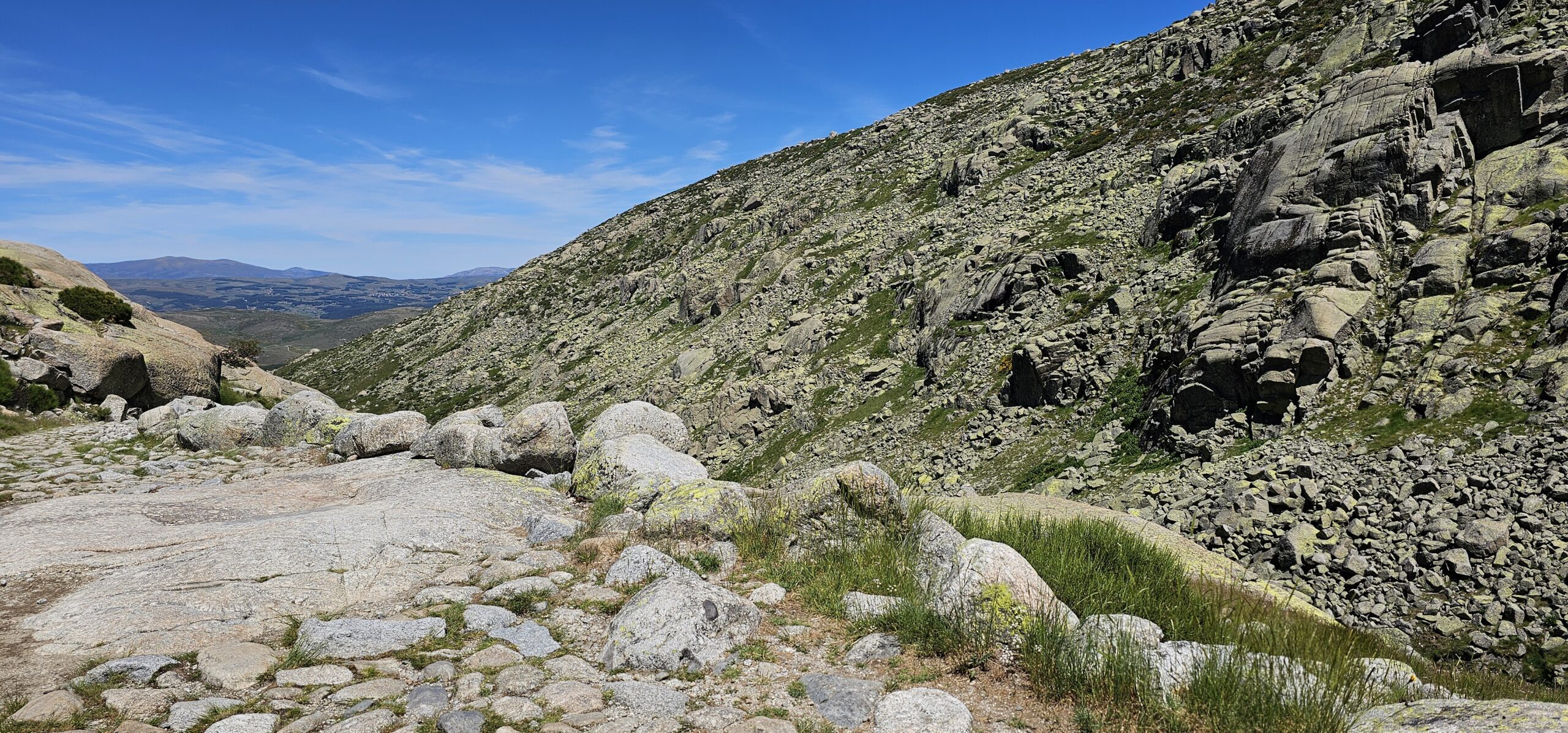
Along some parts of the road were ancient lava spills which the Romans just incorporated into the road. Free labor!
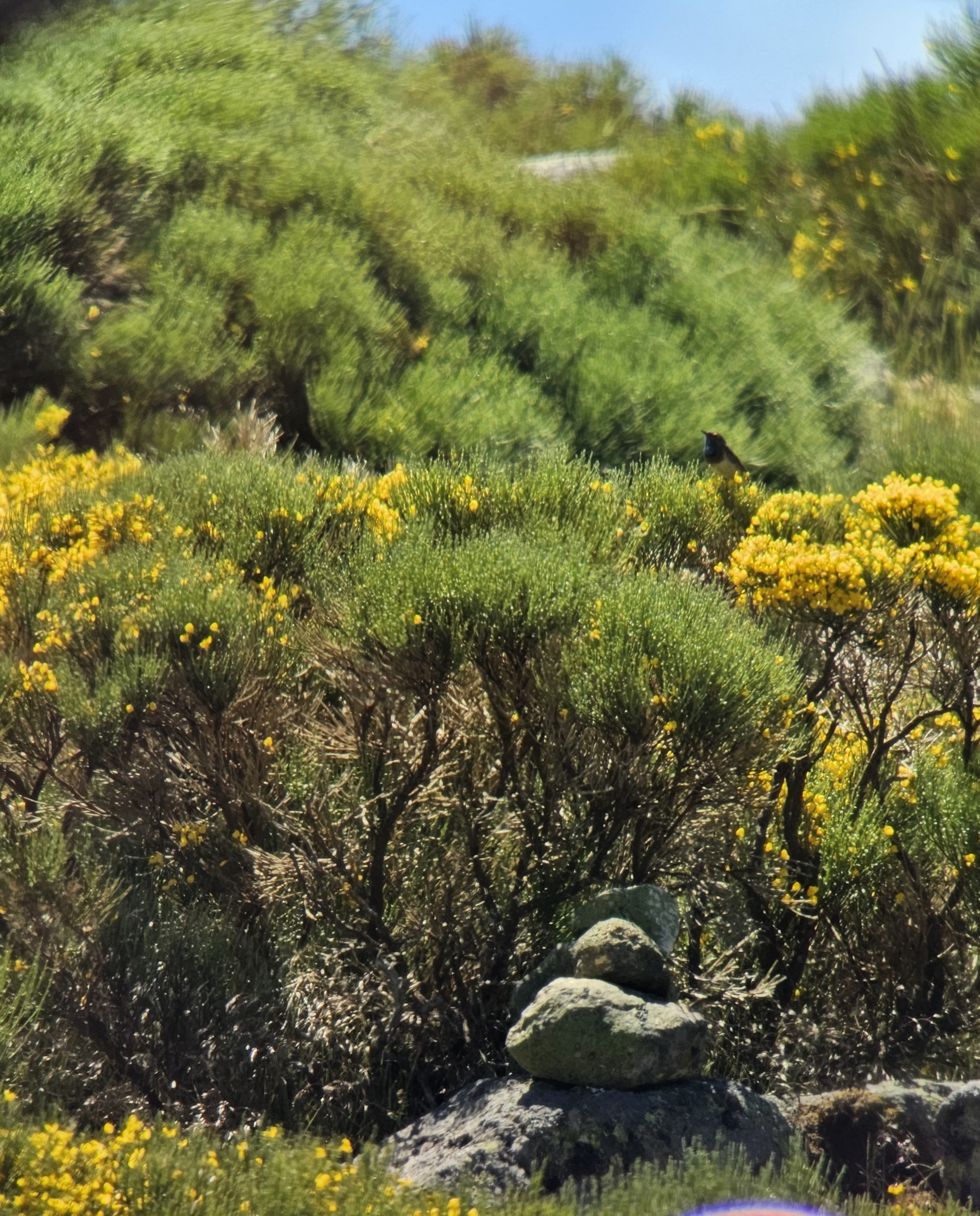
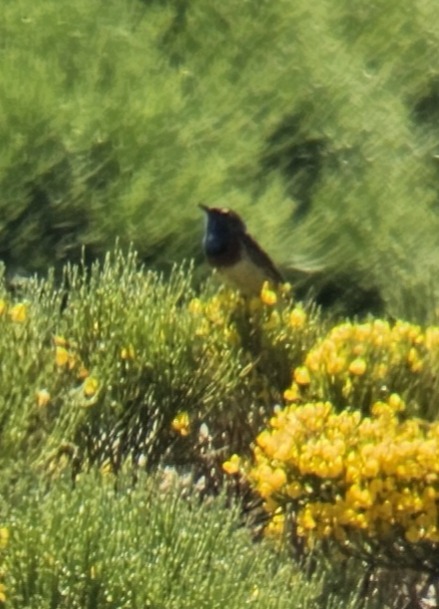
After trekking up and down several slopes we finally got our first glimpses of singing, male Bluethroats! Yay!!!
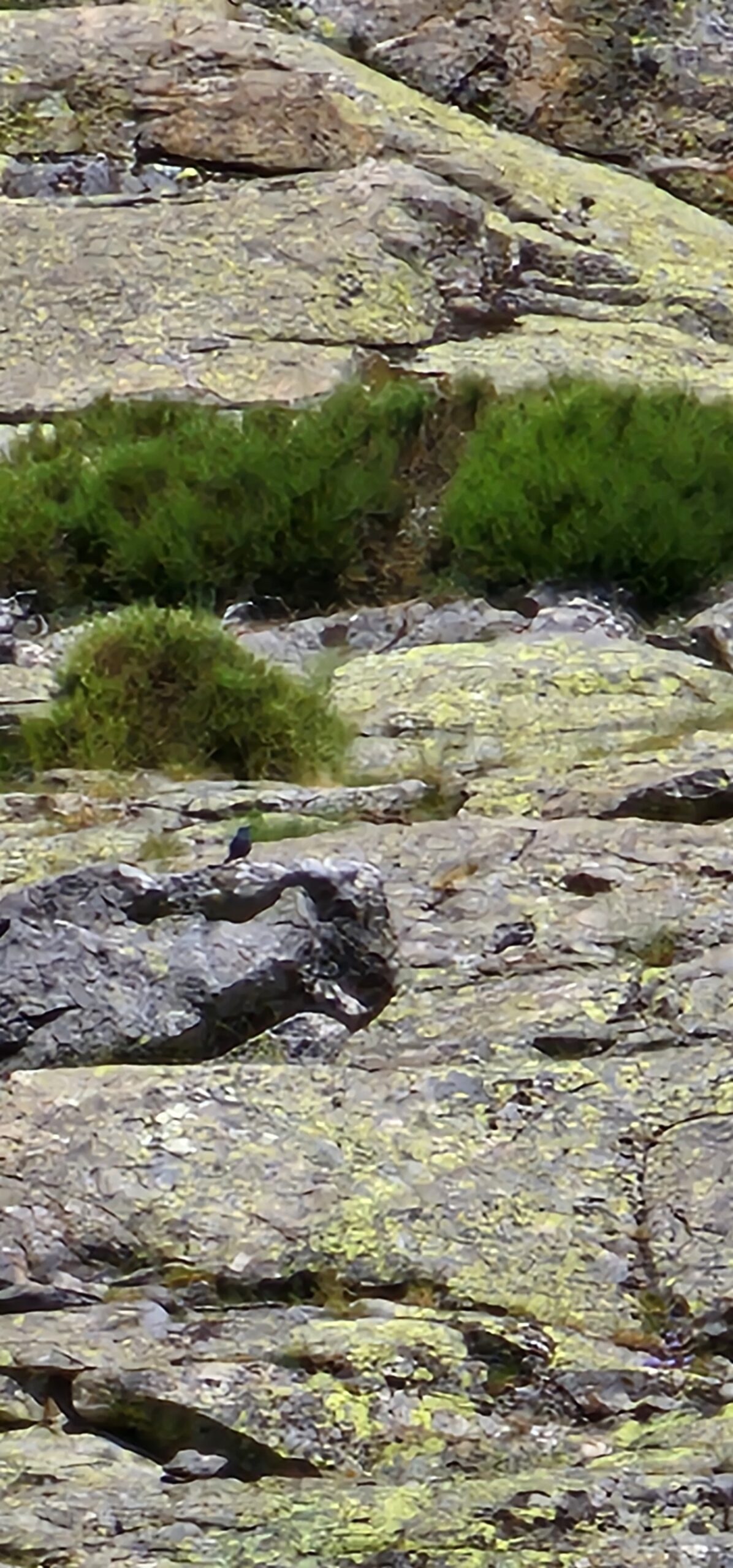
This is a view through the telescope–do you see him?
Here’s a closer look
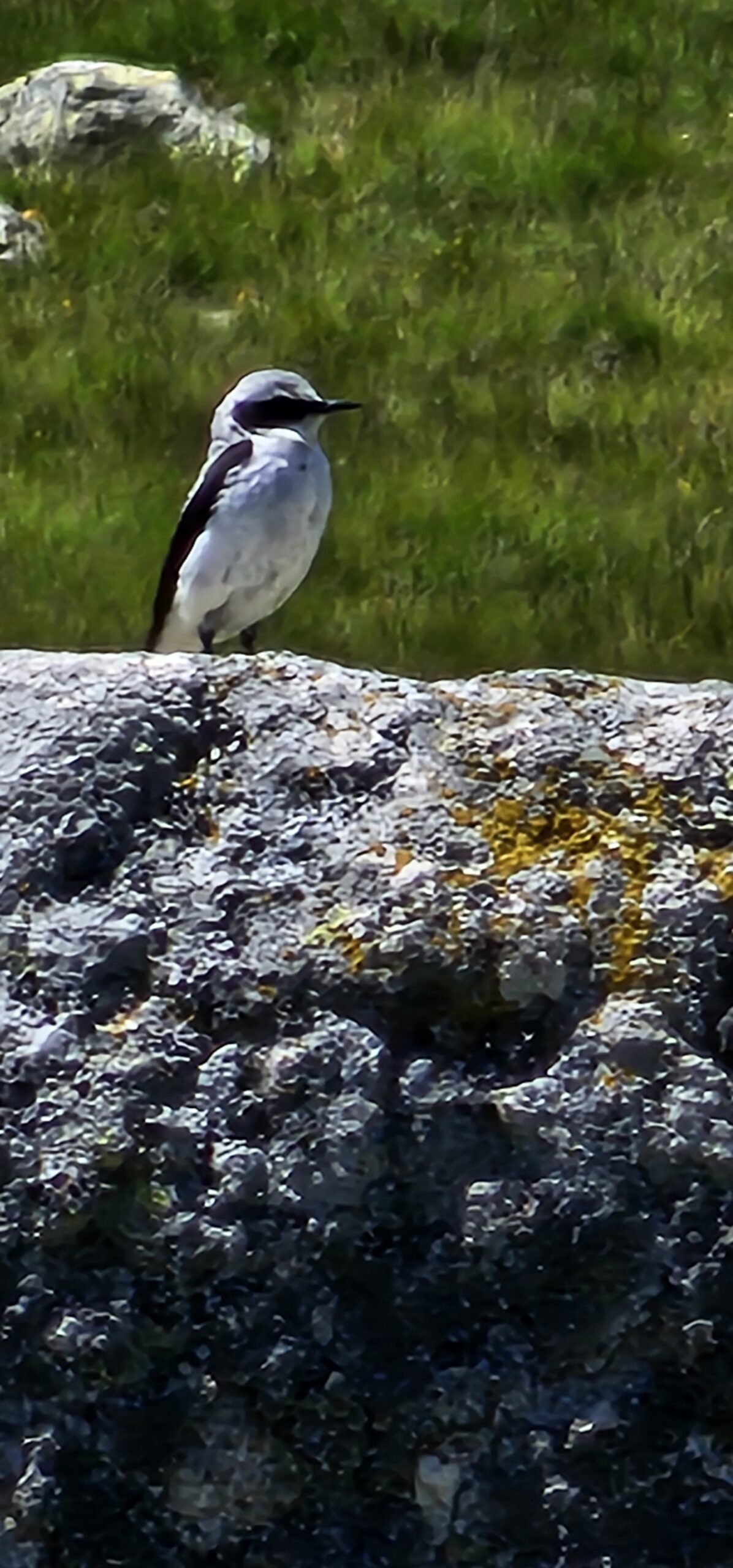
Besides the Bluethroat, we saw a few other nice birds, like this friendly Northern Wheatear which posed nicely for us.
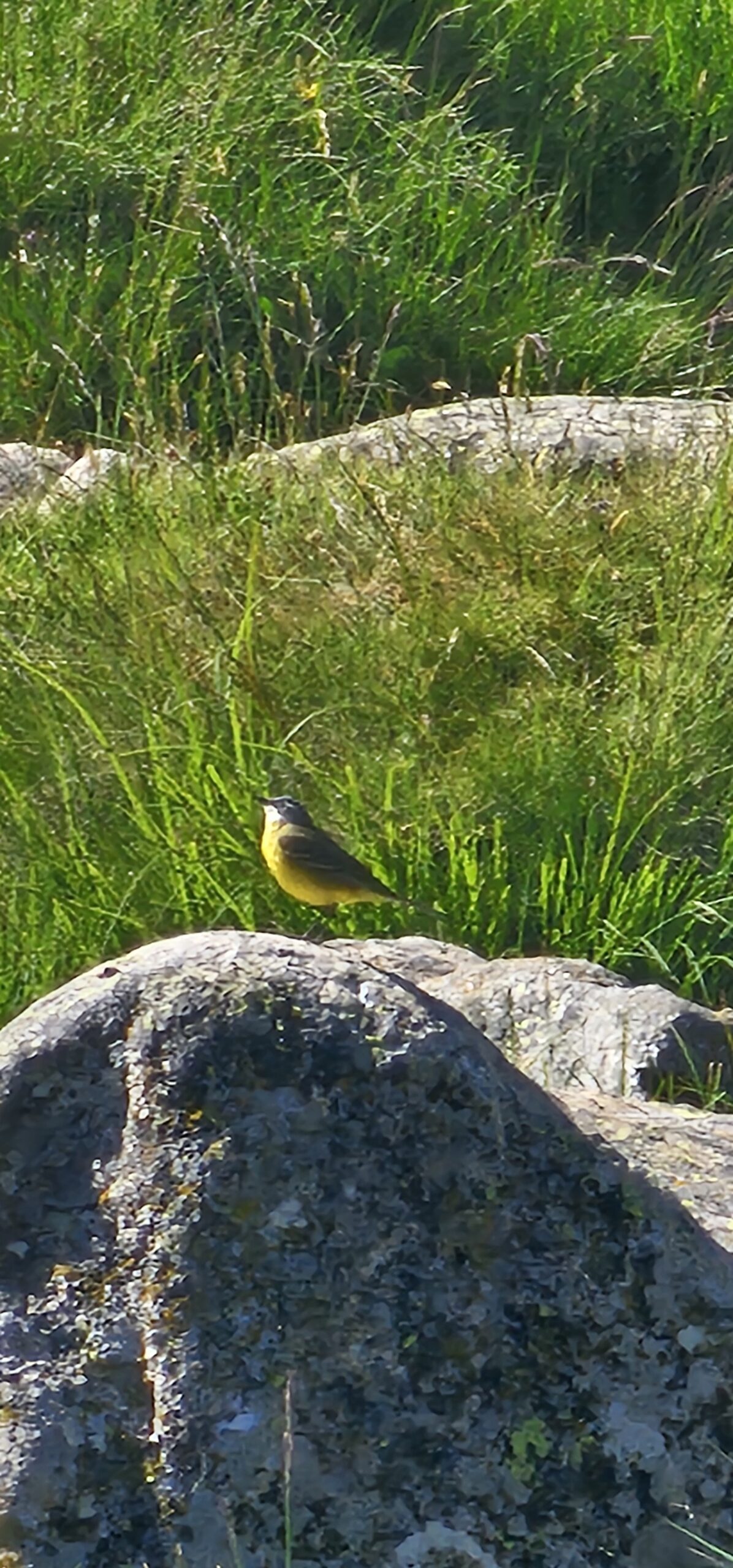
A Western Yellow Wagtail. As their name implies, these birds pump their splendidly long tails up and down.
And a Blue Rock-thrush, which is also a bird that can be difficult to find.
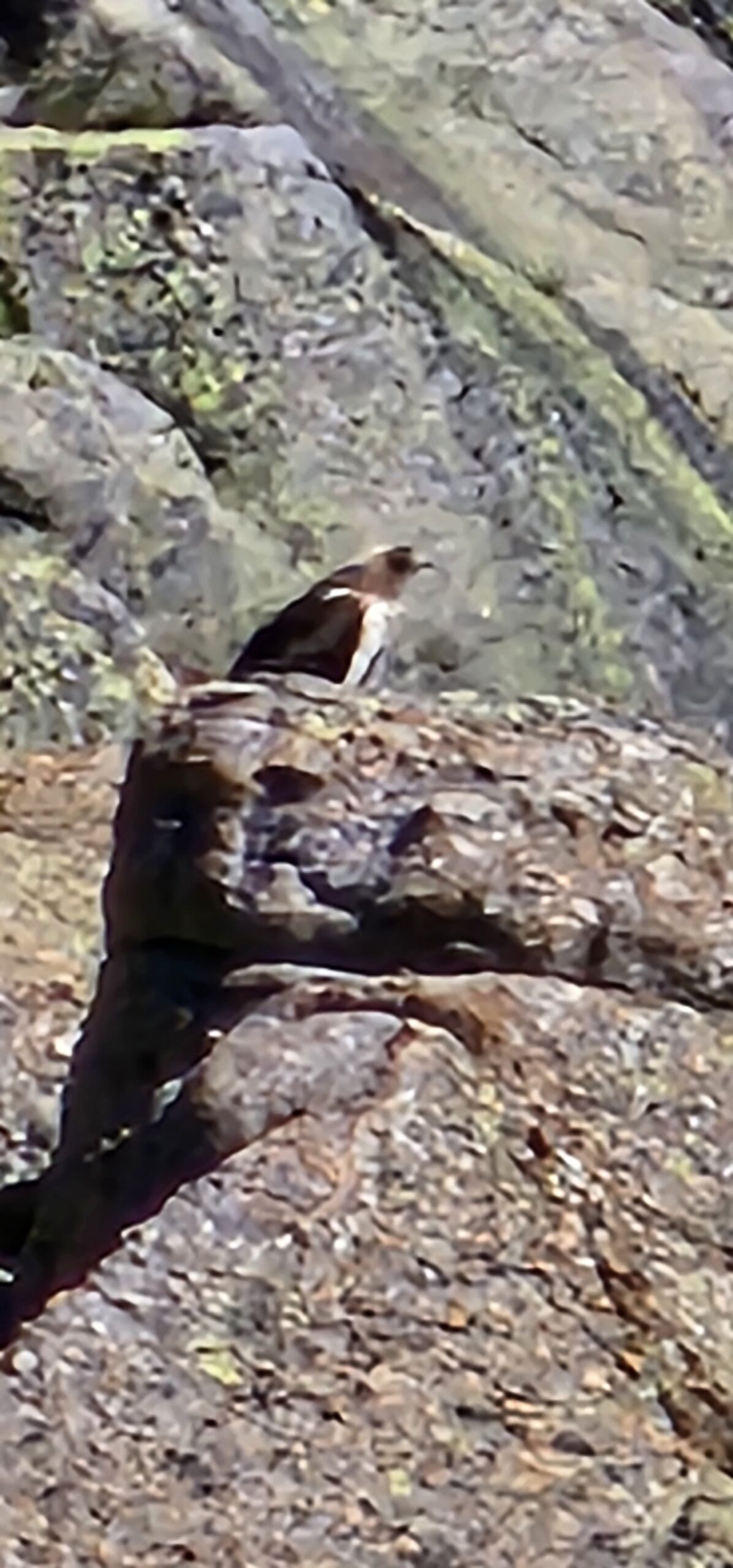
Toward the end we were treated to a close-up look at a Booted Eagle, so called because its feathered legs make it look like it is wearing boots. It landed high on a rock and began eating a rodent that it had captured. My picture is blurry, but you get the idea.
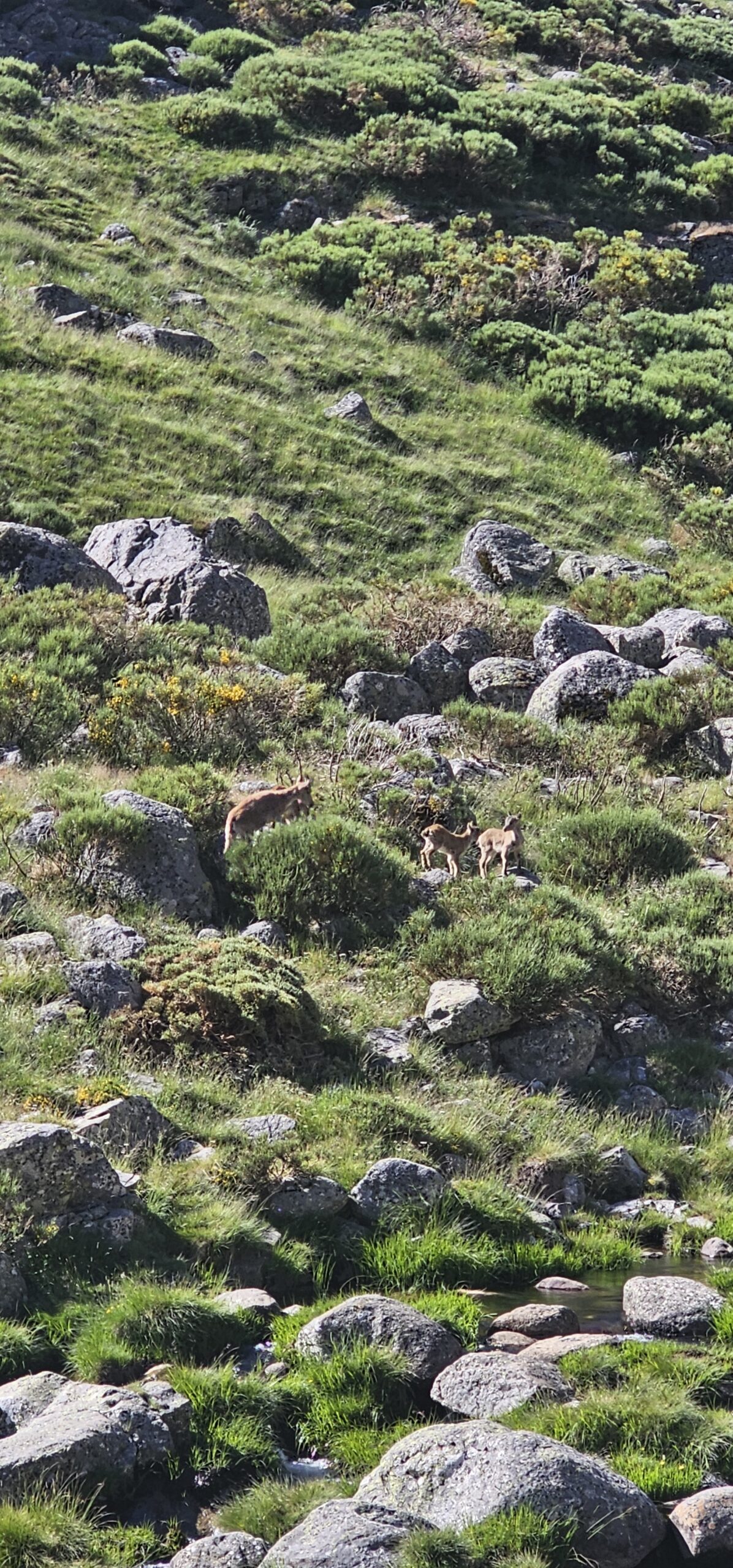
We also caught sight of several Mountain Ibexes, a type of wild mountain goat.
So, if you get a chance to spend some time in the Spanish mountains, or if you too, are hankering to add a Bluethroat to your birding life list, I suggest you come in mid-June to this park, preferably with someone who can help you locate these gorgeous little birds.
And if you’d like to look at more pictures of Bluethroats and a map of their distribution in Spain, check out this link.
And as always, please check out (and tell someone about) my novels here.


1 comment
Wow! What a lovely trip that would make!